
Why does your kitchen still feel dark with the lights on?
Your kitchen can feel dark with the lights on because the light isn’t reaching the surfaces where you need it. Ceiling fixtures may brighten the floor while your body or upper cabinets cast shadows across the countertop. Brighter bulbs can help, but they won’t fix every placement problem.
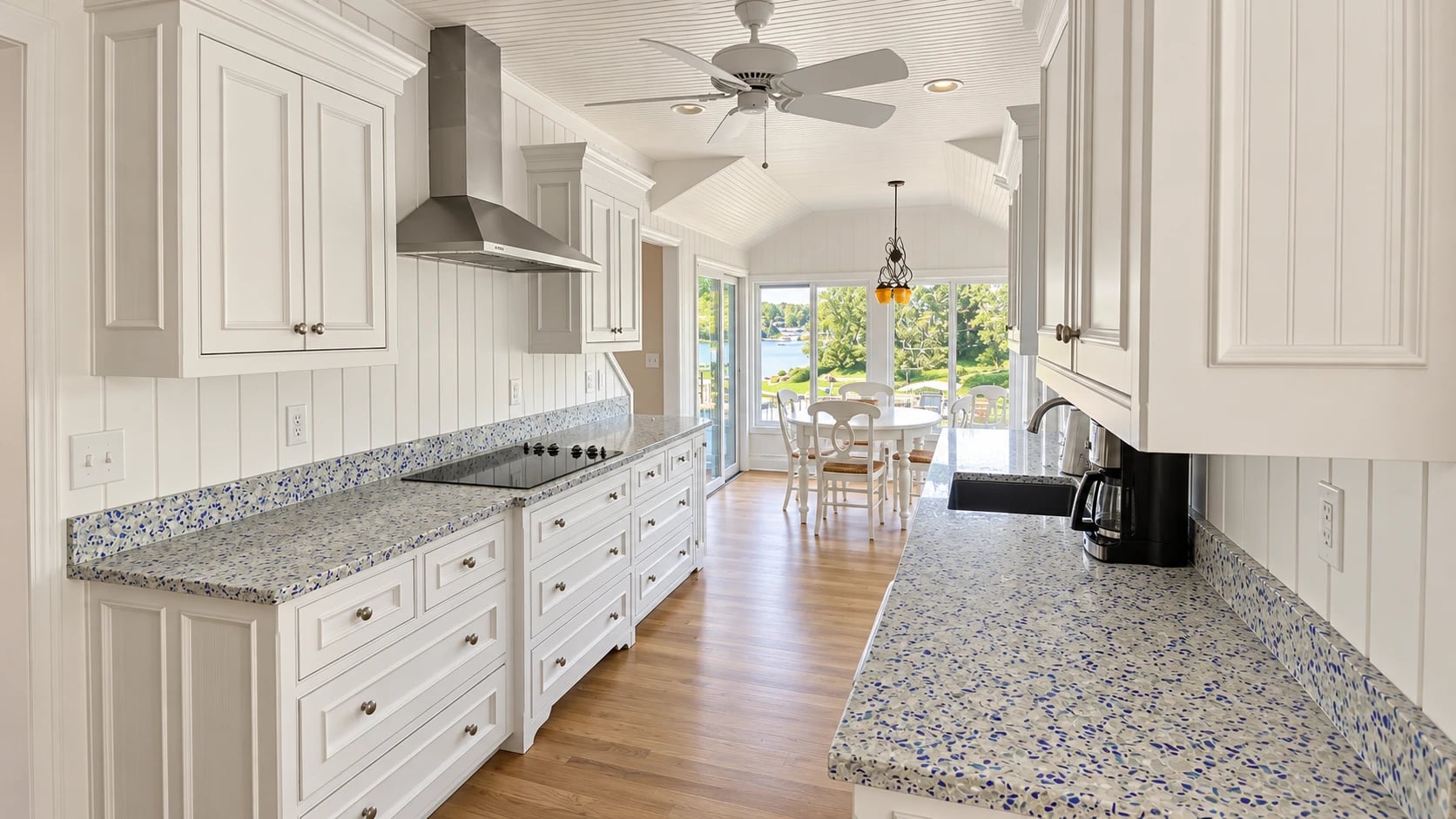
During a kitchen remodel, plan lighting around the work you do: chopping vegetables, washing dishes, finding pantry ingredients and sitting at the island. Then choose fixtures that serve those activities.
For homeowners planning a kitchen remodel in Johnson County, lighting belongs in the conversation alongside cabinetry, appliances and the layout. Waiting until the room is nearly finished can leave fewer options for wiring and fixture placement.
Start with a check after dark
Check your kitchen after sunset, with the lights you normally use turned on. Stand at the counter as if you’re preparing dinner. Look at the cutting board, sink and areas beneath the upper cabinets.
Notice what changes when you move. If the counter brightens when you step aside, your position is blocking some of the light. If a section remains dark regardless of where you stand, it may need a light source aimed at that work area.
Also check the kitchen from a seated position. A fixture that feels comfortable while standing may shine directly into your eyes from an island stool or dining chair.
Take a few photos and write down the problem in plain language: “The counter beside the refrigerator is hard to see at night” is more useful than “We need more lights.”
That gives the remodeling conversation a practical starting point.
Give each light a job
A kitchen usually needs more than one kind of illumination. Think about three roles:
| Layer | What it does | Where it helps |
|---|---|---|
| Ambient | General light for moving through the room. | Ceiling fixtures and daylight. |
| Task | Light on the surface where you’re working. | Under-cabinet fixtures for prep counters; suitable light at the sink. |
| Accent | Light that highlights a detail you want to see. | Display cabinets or shelving. |
Lutron’s guide to layered lighting explains how these roles work together and why the person’s position matters when planning task lighting.
A display cabinet can look great while the neighboring prep counter remains dim. Island pendants can contribute useful light, but they don’t automatically cover the perimeter counters.
Start by giving the work areas the light they need. Add decorative effects where they contribute something you want.
Bring light to the countertops
Under-cabinet lighting puts a light source close to counters that upper cabinets can otherwise shade. If you’re replacing cabinetry, discuss it before the cabinet order and electrical plan are finalized.
Ask the project team to show how the proposed fixtures will work with:
- The underside of each cabinet and any trim that conceals the fixture.
- Breaks in the cabinet run, including windows and the range hood.
- The countertop and backsplash materials.
- Wiring routes and any required power supplies.
- Switch locations and access for future service.
Consider where you actually work. A short run beside the sink may be your main chopping station, while a longer counter holds the toaster and coffee maker. Both areas deserve attention, but their daily use may differ.
Ask to see a sample of the proposed lighting against your surface selections. Check for a comfortable view of the counter, distracting reflections and visible points of light. Judge the result from both standing and seated positions.
A product photo alone won’t tell you how that fixture will look in your kitchen.
Separate brightness from light color
Two lighting specifications answer different questions.
Lumens describe light output. The Department of Energy’s explanation of lumens recommends comparing lumens when shopping for brightness. Wattage tells you power consumption, so it isn’t a reliable way to compare brightness across different lighting technologies.
Kelvin describes the appearance of the light. Lower Kelvin values look warmer and more yellow; higher values look whiter or bluer. Choosing a cooler color doesn’t, by itself, mean you’re getting more light.
ENERGY STAR’s downlight buying guidance explains color temperature and LED dimmer compatibility.
For your remodel, ask to compare the proposed light colors with cabinet, countertop and backsplash samples. View them together rather than choosing each in isolation.
Also consider adjoining rooms. If the kitchen opens directly into the dining or living area, compare how the lighting looks across that connection. Decide whether you want a consistent appearance or an intentional difference.
There’s no reason to choose a color temperature solely because the package calls it “daylight.” Choose the appearance you prefer, then address brightness through the actual light output and design.
Plan pendants around how you use the island
Before shopping for island pendants, decide what happens beneath them. Is the island mainly for food preparation, meals, homework or a mix?
Then review fixture size, hanging height, light distribution and sightlines together. A pendant with an opaque shade behaves differently from one that exposes the bulb. An attractive fixture may need other lighting to support detailed work.
Ask to see the proposed arrangement from the stools, the sink and the adjoining room. Consider who will be standing at the island and whether the fixtures interrupt conversation or views.
If the island’s size or position is still changing, settle that part of the plan before fixing the lighting locations.
Make the controls fit your routines
You may want strong light for dinner preparation and a softer setting while eating. Consider separate controls for ceiling lights, countertop lighting and island fixtures so you can adjust the areas independently.
Walk through a few routines with the project team: entering with groceries, preparing an early breakfast and cleaning up after dinner. Where would you naturally reach for a switch?
Confirm compatibility before buying dimmers. ENERGY STAR notes that not every LED works well with every dimmer. Have the selected fixtures and controls checked together, including any power supplies used for under-cabinet lighting.
Simple controls that everyone in the household understands can be a better fit than features you won’t use.
Include electrical work in the remodel plan
Lighting selections can affect wiring, switches, cabinet details and repairs to walls or ceilings. Ask which work is included and when those decisions need to be final.
For a home in Overland Park, Leawood or another incorporated Johnson County city, check the proposed work with that city’s building department. The Johnson County permits and licenses guide explains that the county’s building department handles unincorporated areas, while projects within cities go through the respective city.
Have a qualified electrical professional evaluate the planned installation and applicable requirements. An existing ceiling opening or switch doesn’t establish that it suits the new equipment.
When comparing proposals, use Tarantola’s guide to what a kitchen remodeling budget should include to check how lighting, electrical work and surrounding finish repairs fit into the complete project.
Bring the problem, not a shopping list
You don’t need to arrive with a fixture shopping list. Bring photos of your current kitchen, identify the work areas that feel dark and describe how you use the room in the morning and evening.
Tarantola Remodeling handles complete kitchen remodels across Johnson County, including Overland Park and Leawood. Tell Tarantola about your kitchen project and include the lighting problems you want addressed along with your layout and storage priorities.