
Can You Live at Home During a Bathroom Remodel?
You may be able to stay at home during a bathroom remodel if another usable bathroom remains available and the work area can be separated from daily living. If you're remodeling your only bathroom, you need a dependable plan for both toilet access and bathing before demolition begins.
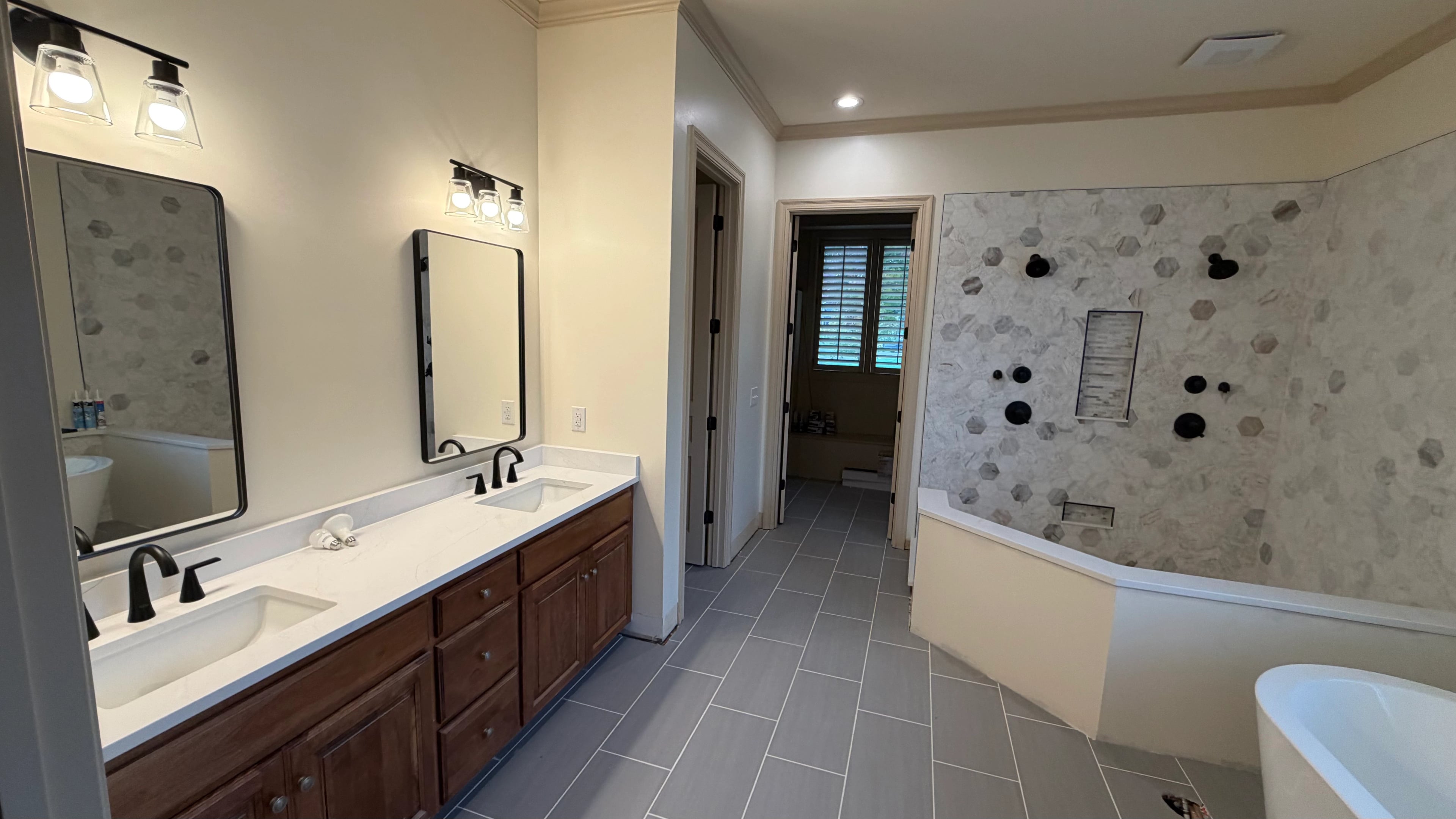
The decision also depends on the work route, temporary utility interruptions, dust control, and your household's needs. A second bathroom helps, but it does not answer every question about occupying the home during construction.
For bathroom remodeling in Johnson County, discuss the living arrangements while the scope is being developed. They can affect how the project is scheduled and whether a particular phase is practical while everyone remains at home.
Count usable bathrooms, not rooms labeled “bathroom”
A half bath solves the toilet problem, but not the shower problem. A basement shower may be available, but difficult to use for someone who cannot comfortably manage the stairs. A guest bathroom on the opposite end of the house may work well unless the construction route passes through it.
Walk through a normal weekday. Where will everyone shower? Where will towels and toiletries go? Can children reach the alternate bathroom without entering the work zone? Can guests or overnight family still use it?
If the only workable answer is a gym, relative's home, or temporary lodging, arrange it before work starts. Do not base the plan on the hope that the old toilet can be reinstalled every evening. Temporary reuse depends on the stage of work and should be agreed explicitly if it is possible at all.
Understand when the room stops being usable
There are several different milestones in a bathroom project. Selecting materials is not the same as beginning demolition. Installing a fixture is not the same as having the completed room ready for normal use.
| Stage | What the household should clarify |
|---|---|
| Before demolition | Which materials and decisions must be ready, and when will bathroom access end? |
| Demolition and rough work | Which routes and utilities are affected, and what temporary arrangements are needed? |
| Preparation and finish installation | Which areas must stay clear, and which work needs to happen before another trade can proceed? |
| Final installation and checks | When can fixtures be used, and what curing or final requirements remain? |
Ask for the expected period without the bathroom and the factors that could change it. A complete remodel and a limited fixture replacement require different conversations. Avoid booking houseguests or a major event around an assumed completion date.
Agree on a work route and daily boundaries
Map how the crew will get from the entrance to the bathroom. If that route crosses a bedroom, stairway, or home office, discuss floor protection, furniture relocation, and access times.
The following details are worth agreeing on before the first delivery:
- Which entrance will the crew use?
- Where will materials and tools be stored?
- Which doors must stay closed?
- How will the work area be separated from occupied rooms?
- Where will debris leave the house?
- What will be secured and cleaned up at the end of a workday?
- Who should you contact if the household needs an access change?
These questions set expectations. They are not a claim about a particular dust-control system or a promise that construction will be dust-free.
Discuss dust and indoor air before the house is opened up
Demolition, sanding, adhesives, and finishes deserve a specific control plan. Ask how the crew will isolate the work, manage debris, and handle ventilation without circulating construction dust through the occupied home.
The EPA's guidance on indoor environmental concerns during remodeling discusses ventilation and pollutants from construction materials and finishes. Use it to inform the conversation, rather than assuming an open window resolves every issue.
For a home built before 1978, ask about painted surfaces that the project may disturb. Kansas administers its own authorized lead renovation program. The Kansas Department of Health and Environment explains licensing and certification for regulated lead activities. Confirm the applicable requirements, the qualifications of the firm performing covered work, and the plan for protecting occupied areas.
Household needs can make a temporary move the better option for some phases. Discuss those needs with the contractor before committing to stay, rather than discovering an unsuitable arrangement after demolition.
Plan water interruptions separately from bathroom access
Your alternate bathroom might remain untouched while plumbing work requires a temporary whole-house water shutoff. Ask how you will be notified, what time of day interruptions are expected, and whether any restrictions continue afterward.
If you work from home, also discuss noisy tasks and inspection or delivery visits. A meeting schedule may be easier to adjust in advance than on the morning a disruptive task starts. The contractor still needs a workable construction sequence, so agree on realistic arrangements rather than assuming every task can move around household plans.
Give pets and children a routine outside the work area
Construction creates open doors, unfamiliar visitors, and equipment that should remain undisturbed. Choose a separate area for pets and a clear route for children. Keep daily supplies somewhere accessible so nobody needs to enter the work zone for a toothbrush or clean towel.
Move medications, toiletries, towels, and valuables before work begins. Empty connected cabinets and closets if they are within the scope. Photograph items or finishes staying in place so their condition is documented before the room changes.
When a short move may be the practical choice
Consider temporary lodging when you have no dependable bathroom alternative, cannot separate the work area from necessary access, or cannot meet household needs during a disruptive phase. Compare that expense with the inconvenience of repeated daily travel and an unreliable bathing arrangement.
For homeowners in Shawnee and homeowners in Lenexa, the useful plan is specific to the home, not the city name. Explain your bathroom count, household routine, and any access constraints at the first conversation.
Our bathroom budget guide explains how to compare scope and allowances. Include temporary living costs in your own project budget where needed.
Planning a complete bathroom remodel? Call Tarantola Remodeling at 816-726-1280. Tell us whether this is your only bathroom and what daily access needs the project must account for.