
Should a Kitchen Range Hood Vent Outside?
Yes. When there’s a workable duct route, an outdoor-vented range hood is usually the better choice for a kitchen remodel. It captures steam, smoke, odors and airborne grease above the cooktop and carries them outdoors. A ductless hood filters some grease and odors, then returns the air and its moisture to the kitchen.
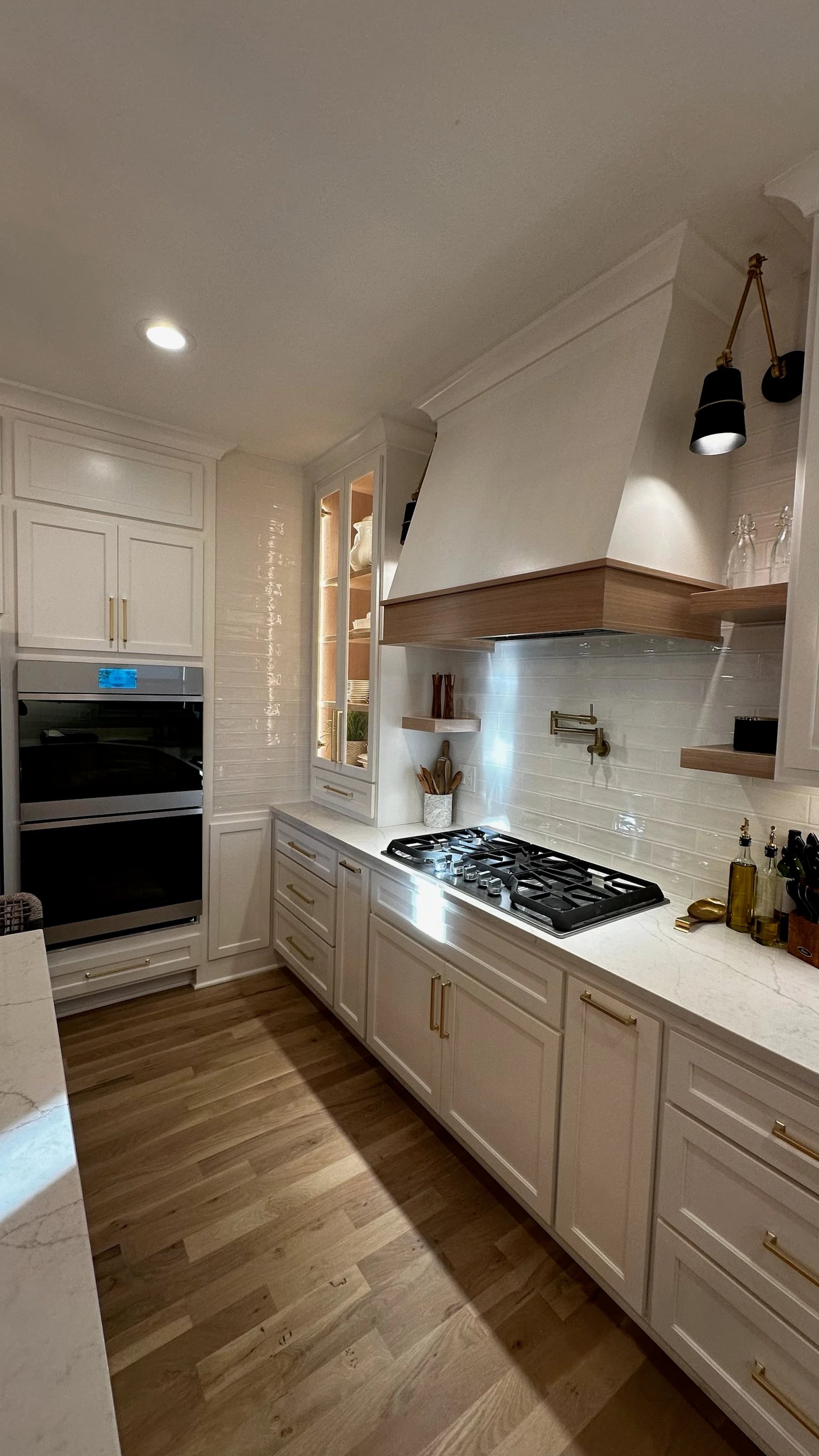
If you’re planning a kitchen remodel in Johnson County, settle the cooktop location and the path to an exterior wall or roof before you approve cabinet drawings. Those decisions can affect which hood fits, how much storage you’ll have and what the contractor needs to price.
Ducted vs. ductless range hoods
Both types use grease filters. A ducted hood sends the captured air outside after filtration. A ductless or recirculating hood may also use a charcoal filter to reduce odors, depending on the model. Because it returns the air to the room, steam stays indoors. See the Home Ventilating Institute’s comparison of ducted and ductless hoods.
If the current cooking location makes outdoor venting difficult, ask your remodeler to compare a wall or roof route with moving the cooktop. You’ll know what each option costs in cabinet space and finish work before choosing a hood.
Choose hood size and airflow for the way you cook
CFM stands for cubic feet per minute, a measure of airflow. Start with the range or cooktop model, then check hood coverage, mounting height and duct requirements. Tell your remodeler if you often sear, fry or use several burners at once. The same fan rating can perform differently depending on how well the hood covers the burners and how much resistance the duct adds.
An island hood is exposed on all sides, where air movement can push steam and smoke past the hood. The Home Ventilating Institute recommends more airflow for island hoods than for comparable wall installations. For professional-style equipment, follow the cooktop manufacturer’s recommendations. See Home Ventilating Institute’s sizing guide.
If you’re weighing an island cooktop, compare what each layout means for sightlines, pendants, seating and the duct path above the room. Tarantola’s guide to keeping or changing a kitchen layout walks through how to compare the whole room.
Plan where the range hood will vent
Ask to see the duct route on the plan. It might pass through an upper cabinet, a soffit or a ceiling cavity before reaching a wall cap or roof cap. A short, straight run of smooth metal duct helps preserve airflow. Check the selected model’s instructions for duct size, fittings and maximum run length. See Home Ventilating Institute’s duct guidance.
Have the plan show where the duct exits and who’ll restore the cabinet, drywall, siding or roofing affected by the work. The duct should end outdoors. An attic, crawlspace or cavity between floors can collect the moisture and grease you’re trying to exhaust. See the U.S. Department of Energy’s kitchen exhaust guide.
When does a range hood need makeup air?
Makeup air is outdoor air brought in to replace what an exhaust fan removes. A high-capacity hood can lower indoor air pressure enough to pull exhaust gases back into the home from some fuel-burning appliances. This is called backdrafting. See the EPA’s kitchen remodeling guidance.
Ask your remodeler or HVAC contractor to review the proposed hood, how tightly the home is sealed and any fuel-burning equipment, including furnaces, water heaters and fireplaces. Have them confirm the local requirements and who’ll verify the installation. If the project needs makeup air, include it in the scope before you order the hood.
Fit the hood into the cabinets and your daily routine
A visible metal hood, a concealed insert and an over-the-range microwave need different cabinet openings and clearances. Confirm the model, mounting height, electrical connection and access to the filters before cabinet drawings are final. If you’re considering a concealed insert, Tarantola’s kitchen remodel with a custom hood enclosure shows how the hood, cooktop and adjacent cabinetry can fit together.
Compare sound ratings at the speeds you’ll actually use. Check that the controls are easy to reach and the grease filters come out easily for cleaning. If the hood has task lighting, coordinate it with the rest of your kitchen lighting plan. Run the hood while you cook and for 10 to 20 minutes afterward. Use the back burners when practical so the hood can capture more of what rises from the pans. See the EPA’s guide to indoor air while cooking.
What should a range hood installation quote include?
Use these questions to compare proposals, especially if you’re buying the hood yourself.
| Scope | What to confirm in writing |
|---|---|
| Hood | The exact model, who supplies it and who handles installation and the electrical connection. |
| Duct | The route, duct size, wall or roof cap and any checks needed to reuse existing ductwork. |
| Finishes | Cabinet changes and repairs to drywall, tile, siding or roofing around the new route. |
| Makeup air | Who evaluates the need and, if required, who installs and checks the system. |
| Permits | Who confirms what the project needs, applies for permits and schedules inspections. |
If your home is in Overland Park, Leawood or another city, check permit requirements with that city’s building department. If you’re in an unincorporated area, contact the county. Describe the proposed duct, electrical work and any structural changes when you ask. To confirm who handles permits at your address, use the Johnson County residential remodel permit guide.
For the rest of the project scope, see Tarantola’s guide to building a kitchen remodeling budget.
Kitchen range hood FAQs
Do you need an outdoor-vented hood with an electric or induction cooktop? Outdoor exhaust is still useful. Frying, searing and boiling release particles or moisture regardless of how the pan is heated.
Can you reuse an existing range hood duct? Sometimes. Have your installer confirm that the duct vents outdoors and that its size, condition and route meet the new hood’s installation requirements.
Can you use a recirculating hood if you can’t duct outdoors? It can reduce grease and some odors. It’ll return the cooking air to the kitchen, so ask your remodeler what other ventilation options are practical and what local requirements apply.
What to bring to your first kitchen planning conversation
Bring photos of the current hood, surrounding cabinets and nearby exterior wall. If you’ve picked a range or cooktop, share the model number. Mention any plans to move the cooking area and what you’d like to improve, whether that’s lingering cooking smells, fan noise or lost cabinet space.
If you’re planning a full kitchen remodel in Johnson County, tell Tarantola Remodeling about your kitchen. Include the current cooking location and the layout changes you’re considering.